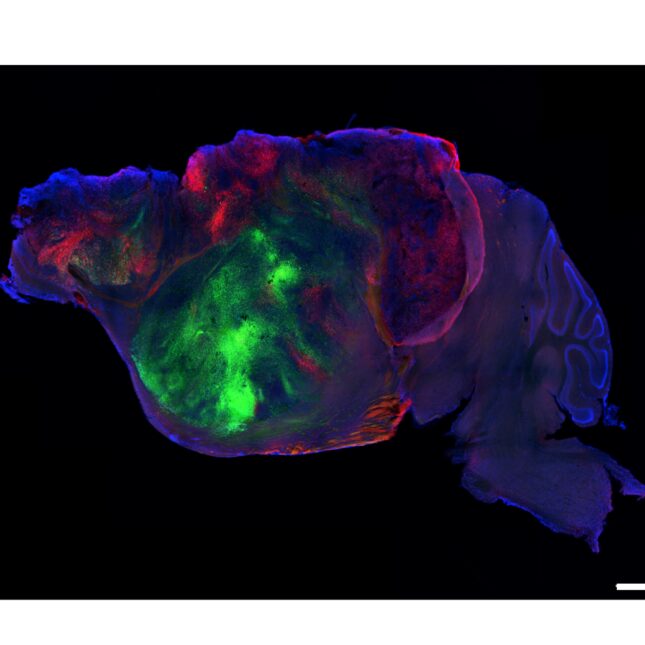
Researchers at Stanford University have developed a groundbreaking method to grow human cerebral organoids within genetically modified mice that have had significant portions of their own brains removed. This innovative approach enhances the study of brain development and disease by allowing scientists to observe human brain cells in a living organism, a significant advancement in neuroscience research.
The creation of these “neuro-chimeric” mice, which contain human brain tissue by volume, addresses a critical challenge in neuroscience: the difficulty in obtaining human brain tissue for research purposes. However, this advancement also brings forth complex ethical considerations regarding the implications of creating animals with human-like brain structures, raising questions about consciousness and the moral status of such chimeric beings.
In a recent study published in Nature, the Stanford team identified human cells within the brains of three-month-old chimeric mouse pups, including specialized neurons linked to social cognition, typically found in larger mammals. This discovery not only underscores the potential of organoid technology but also highlights the pressing need for regulatory frameworks to guide future research in this ethically sensitive area.
Open the full market picture for your next decision →