Seventeen companies were named first when Washington imposed a 100% tariff on patented drugs and their ingredients – and most of them had already negotiated their way out of paying it. Everyone else runs out of road on September 29.
Two months ago, seventeen companies quietly became the most privileged importers in American pharmaceutical history. Everyone else in the industry – the mid-size specialty manufacturers, the API traders, the CDMOs running lean margins on single-source injectables – has been living on borrowed time since April, waiting for a deadline most of the public never noticed. That deadline arrives on September 29.
By then, a 100% duty on patented drugs and their active ingredients will apply to virtually every pharmaceutical importer in the country that isn’t named in a four-page annex to a presidential proclamation. The companies on that list got five months’ head start. The rest of the industry gets eight days’ warning, because that’s roughly what’s left as this piece goes to press.
What Actually Happened, and When
On April 2, 2026, the White House signed a proclamation invoking Section 232 of the Trade Expansion Act of 1962 – the same Cold War–era national security statute previously reserved for steel, aluminum, and copper – and pointed it at pharmaceuticals for the first time in the law’s 64-year history. The justification: the Secretary of Commerce found that roughly 53 percent of patented pharmaceutical products sold in the United States are manufactured overseas, and only 15 percent of patented active pharmaceutical ingredients by volume are produced domestically.
The proclamation didn’t hit all at once. It built in a staggered rollout across two dates and four annexes, and the gap between those two dates is where this story lives.
Tariffs took effect on July 31, 2026 for most of the companies named directly in the proclamation. Companies that had already signed a most-favored-nation pricing agreement with the government before the proclamation and were listed in Annex II were exempted from the duty entirely. Everyone else – the companies named in Annex III – got a start date of September 29, 2026. Annex IV carves out a further list of HTSUS-coded chemicals, vitamins, hormones, antibiotics and preparations held at zero. Generic drugs and biosimilars, for now, sit outside the whole framework.
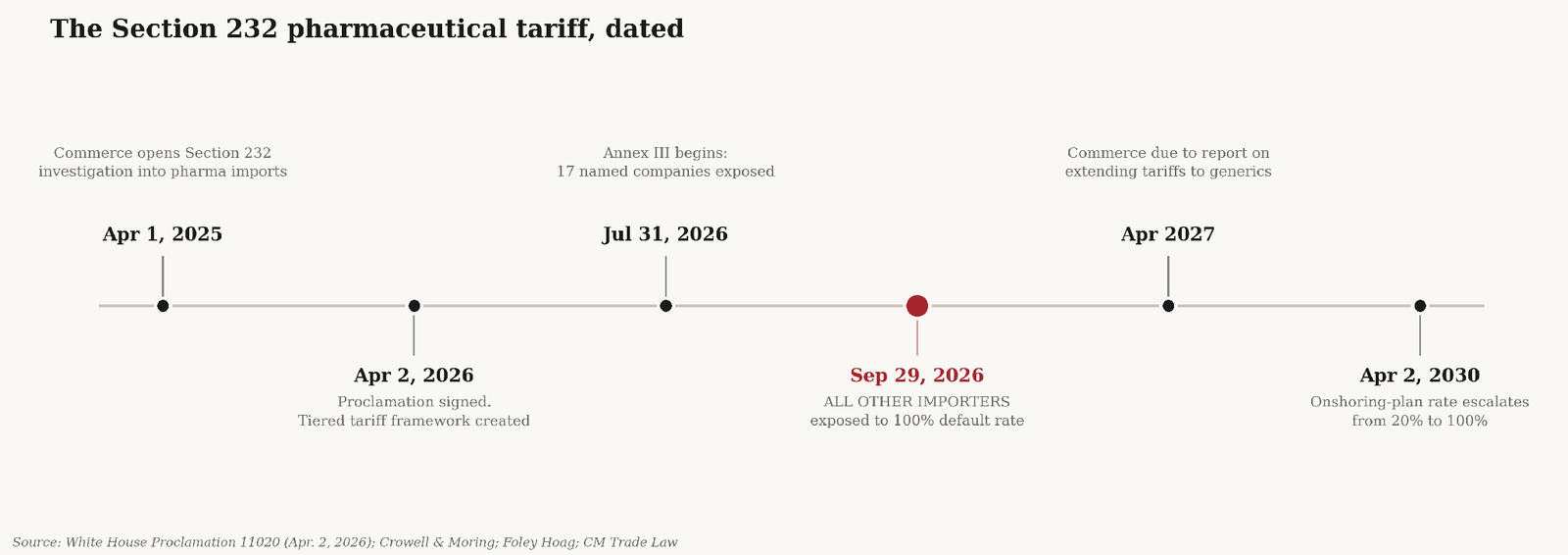
Figure 1. Key dates in the Section 232 pharmaceutical tariff rollout.
| Annex | What it does | Effective date |
|---|---|---|
| Annex I | Lists ~130 covered HTSUS tariff lines across Chapters 29–30 (APIs, key starting materials, finished patented products) | – |
| Annex II | 13 companies with pre-existing MFN pricing agreements – 0% duty pathway | In force since signing |
| Annex III | 17 named large pharmaceutical companies (13 of which also sit in Annex II) | July 31, 2026 |
| Annex IV | Specific HTSUS codes held at 0% – chemicals, vitamins, hormones, antibiotics, orphan drugs | In force since signing |
| Everyone else | All other importers with no company-specific agreement on file | September 29, 2026 |
Table 1. How the proclamation’s four annexes sort the industry.
The List That Matters
Annex III names seventeen companies whose exposure begins on the earlier date: AbbVie, Amgen, AstraZeneca, Bristol Myers Squibb, Boehringer Ingelheim, Eli Lilly, EMD Serono, Genentech, Gilead Sciences, GlaxoSmithKline/ViiV Healthcare, Johnson & Johnson, Merck Sharp & Dohme, Novartis, Novo Nordisk, Pfizer, Regeneron, and Sanofi. Put plainly: the entire recognizable skyline of American and European big pharma.
Here is where the story stops being a straightforward tale of large companies absorbing pain first and small ones catching up later, and turns into something closer to an inside joke at everyone else’s expense. Thirteen of those seventeen Annex III companies had already negotiated individual pricing agreements with Commerce before the proclamation was even signed, placing them simultaneously in Annex II – the zero-tariff track. Customs is currently instructing those qualifying products toward a tariff heading that carries no additional Section 232 duty at all.
Being named first has functioned less as a punishment and more as a formality – a public acknowledgment of deals already struck in private.
The other four – the ones in Annex III without a matching Annex II deal – are the closest thing this proclamation has to genuine losers among the giants, and even they had five months of certainty and legal counsel most importers could only envy.
Who Actually Falls Off the Cliff
The tiered rate structure rewards exactly the kind of institutional access that large multinationals have and smaller importers don’t. The European Union, Japan, South Korea, and Switzerland together with Liechtenstein face a 15 percent rate. The United Kingdom sits at 10 percent. Companies with an approved onshoring plan on file with Commerce get 20 percent, a rate scheduled to climb to 100 percent by April 2, 2030. Companies with a signed MFN pricing agreement pay nothing. Everyone left standing after that sorting process pays the full 100 percent starting September 29 – and that default bucket is not populated by household names. It’s populated by the parts of the pharmaceutical supply chain nobody profiles: the specialty API brokers sourcing key starting materials from three suppliers in Gujarat, the small-molecule CDMOs running a single product line, the niche biologics importers who don’t have a government affairs department, let alone a seat at the table where onshoring plans get negotiated.
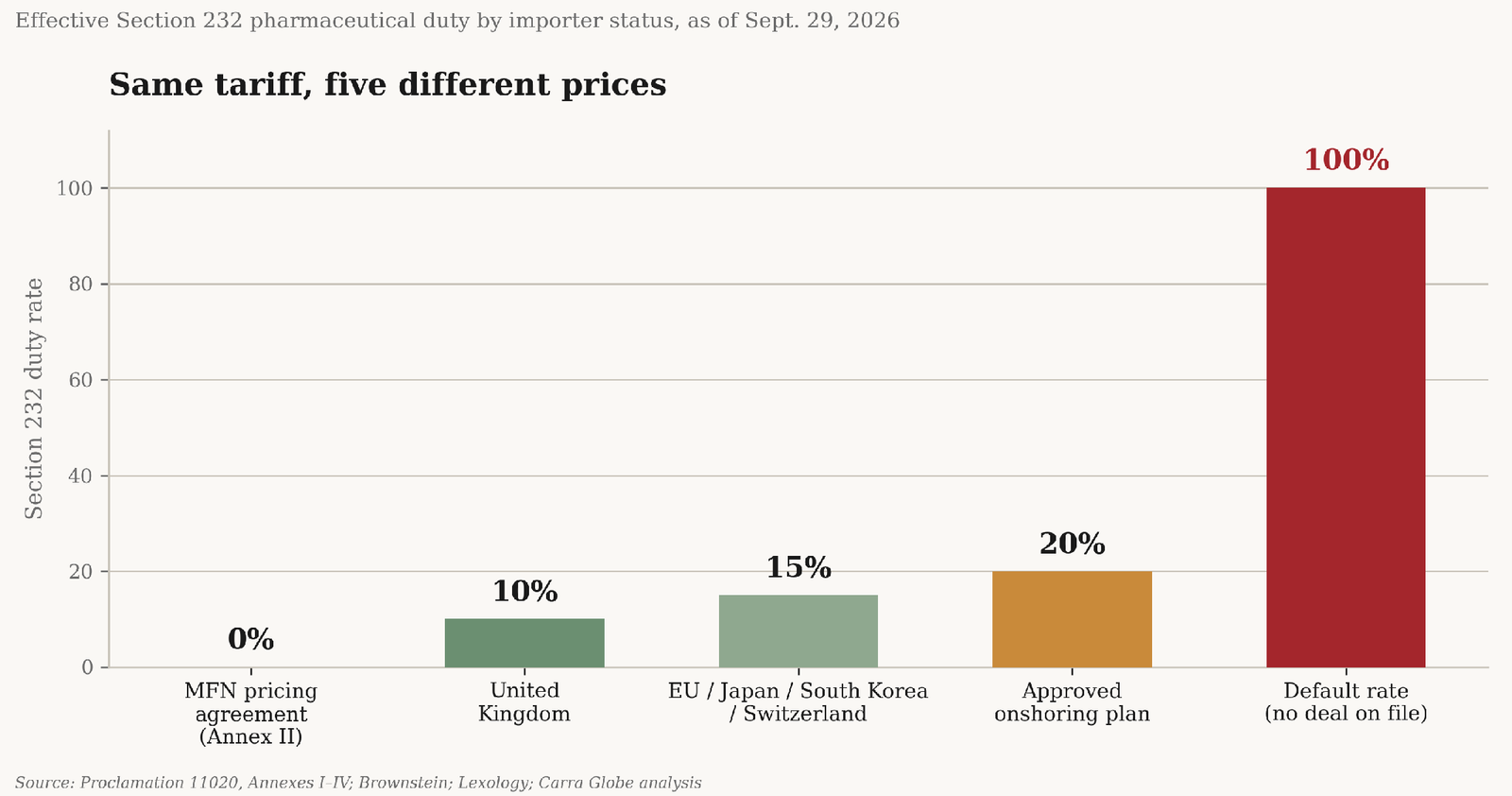
Figure 2. The same duty, priced five different ways depending on who you are.
India – the largest volume producer of generic drugs in the world and a primary global supplier of active pharmaceutical ingredients – sits at the default 100 percent rate for anything tied to a patented US product unless an individual company agreement is in place. Generic finished products remain excluded, which sounds like relief until you notice what it doesn’t cover: an Indian facility manufacturing API destined for a patented US drug faces the full duty regardless of whether the finished dose itself is exempt. The exemption protects the label. It does not protect the ingredient.
None of this is theoretical for the companies now required to disclose it. Regulatory filings from mid-tier and clinical-stage biopharmaceutical firms this year read like a chorus of the same warning, phrased with the particular caution of securities lawyers. Roivant Sciences told investors the new tariffs “may raise costs for drug products and inputs used in our clinical development programs or that our contract manufacturers and suppliers may procure in connection with manufacturing our product candidates,” while cautioning that significant uncertainty remains about how the exemptions and exclusions will actually be applied, since key elements of the action are still to be determined through subsequent agency decisions. Akebia Therapeutics disclosed the same tariff framework almost verbatim in its own quarterly filing, naming its own approved products among those now exposed to the mechanics of the Orange Book and Purple Book patent test. These are not conglomerates with in-house trade counsel on retainer for exactly this scenario. They are the mid-size and small companies the annex system was never built to protect.
Why “Generics Are Exempt” Is Not the Reassurance It Sounds Like
The industry’s collective sigh of relief over the generics exclusion deserves a second look, because the exclusion has an expiration mechanism built into it. Commerce is required, within one year of the proclamation, to advise the President on whether the tariffs should be extended to generic pharmaceuticals and their associated ingredients. That review lands around April 2027. Nothing about the current exclusion is permanent; it is a one-year stay, not an acquittal. Companies with generic or biosimilar portfolios have been told, in language lawyers rarely bother to soften, to treat the current exemption as a standing item to monitor rather than a settled exemption.
The political signaling makes the stay look shorter still. In July 2026, the administration floated a phased tariff plan aimed specifically at imported generic drugs for manufacturers who haven’t committed to building US facilities, announced not through a signed order but through a social media post – legally inert for now, but a fairly clear statement of where the appetite lies. An industry that spent the summer congratulating itself on dodging the bullet aimed at branded drugs may be looking at a second bullet with its name already engraved.
The Legal Ground It’s Standing On
There is a temptation to assume this entire structure is as fragile as the tariff regime that preceded it. It isn’t, and conflating the two is the most common mistake in current trade commentary. The Supreme Court’s February 2026 ruling struck down tariffs imposed under the International Emergency Economic Powers Act – not Section 232 actions. Section 232 draws its authority from a different statute, built on a formal national security investigation that Commerce opened back in April 2025 and concluded before the proclamation was signed a year later. It has survived this year’s court challenges intact. Anyone modeling their 2027 procurement budget on the assumption that courts will do the industry’s lobbying for it is building on sand.
What to Actually Do Before the 29th
For the companies staring at the September 29 date without a deal in hand, the practical checklist is short and unforgiving: confirm the patent status of every imported product against the FDA’s Orange and Purple Books, since that status – not brand recognition – is what determines exposure; classify every API and key starting material against the roughly 130 tariff lines Annex I added across HTS Chapters 29 and 30; and model landed costs against the country-of-origin table, because a product shipped from an EU facility now costs structurally less to land than the identical molecule shipped from a facility in India or China with no company-specific deal.
The onshoring pathway theoretically offers relief at 20 percent, but the mechanism for getting there remains unsettled. The infrastructure argument for reshoring runs deeper than API alone – roughly 98 percent of drug products sold in the United States rely on foreign manufacturing at some point across the key starting material, API, or finished product chain, according to industry analysis, which means an onshoring plan narrow enough to win fast approval is also narrow enough to leave most of a company’s actual exposure untouched.
The Uncomfortable Part
Strip away the trade law and what’s left is a policy that was sold as a national security measure to reduce dependence on foreign drug manufacturing, and has functioned, in its first six months, as a sorting mechanism that separated the companies who could afford Washington representation from the companies who couldn’t. The seventeen names in Annex III were never the intended casualties of this tariff – most of them wrote their own exemption before the ink on the proclamation dried. The casualties are quieter: the specialty importer who didn’t know an onshoring plan was even an option, the CDMO whose entire margin structure assumed October shipping costs that no longer exist, the API broker in Gujarat who just became 100 percent more expensive to do business with overnight, through no failure of quality or compliance, but because nobody at their scale had a seat at the table in April.
September 29 will not look like a headline event. There will be no ceremony, no signing, no press conference – just an entry rate that doubles on a customs form for thousands of shipments that cleared duty-free eight weeks earlier.
That quiet, procedural cruelty is the real story here, and it is the one the trade press has been slower to tell than the story of which giant company paid what percentage to which country.
Sources: White House Proclamation 11020 (Apr. 2, 2026) and Annexes I–IV; Crowell & Moring; Foley Hoag; CM Trade Law; Brownstein Hyatt Farber Schreck; Lexology; Carra Globe; Mallory Group; Gateway Lines; PharmaNow; SEC filings of Roivant Sciences, Akebia Therapeutics, Atara Biotherapeutics, Hemab Therapeutics and Axsome Therapeutics (FY2026 10-Q/10-K/S-1).
Use the database as your supply chain compass →