Frost & Sullivan has released a report analyzing the evolution of China’s biopharmaceutical industry, which is transitioning from traditional drug manufacturing to competing in international markets through innovative medicines and partnerships. The report, titled the 2026 Blue Book on the Internationalization of China’s Biopharmaceutical Industry, highlights the sector’s shift from supplying active pharmaceutical ingredients (APIs) to developing innovative therapies and exporting generic drugs and biosimilars. As domestic competition intensifies, global expansion is becoming crucial for Chinese companies, allowing them to access larger markets and enhance the value of their drug candidates. The report identifies opportunities in peptide hormones, specialty APIs, and CDMO services, emphasizing the importance of quality systems and regulatory experience in maintaining competitive advantage. Additionally, it notes a significant increase in business development and licensing activity, with cross-border transactions surpassing domestic ones for the first time in 2026. This trend reflects China’s growing participation in global drug development and the evolving nature of deal structures, which now often include multiple assets and long-term strategic relationships. Despite the challenges faced by Chinese drug makers, sustained investment in quality management and regulatory expertise is essential for continued international growth.
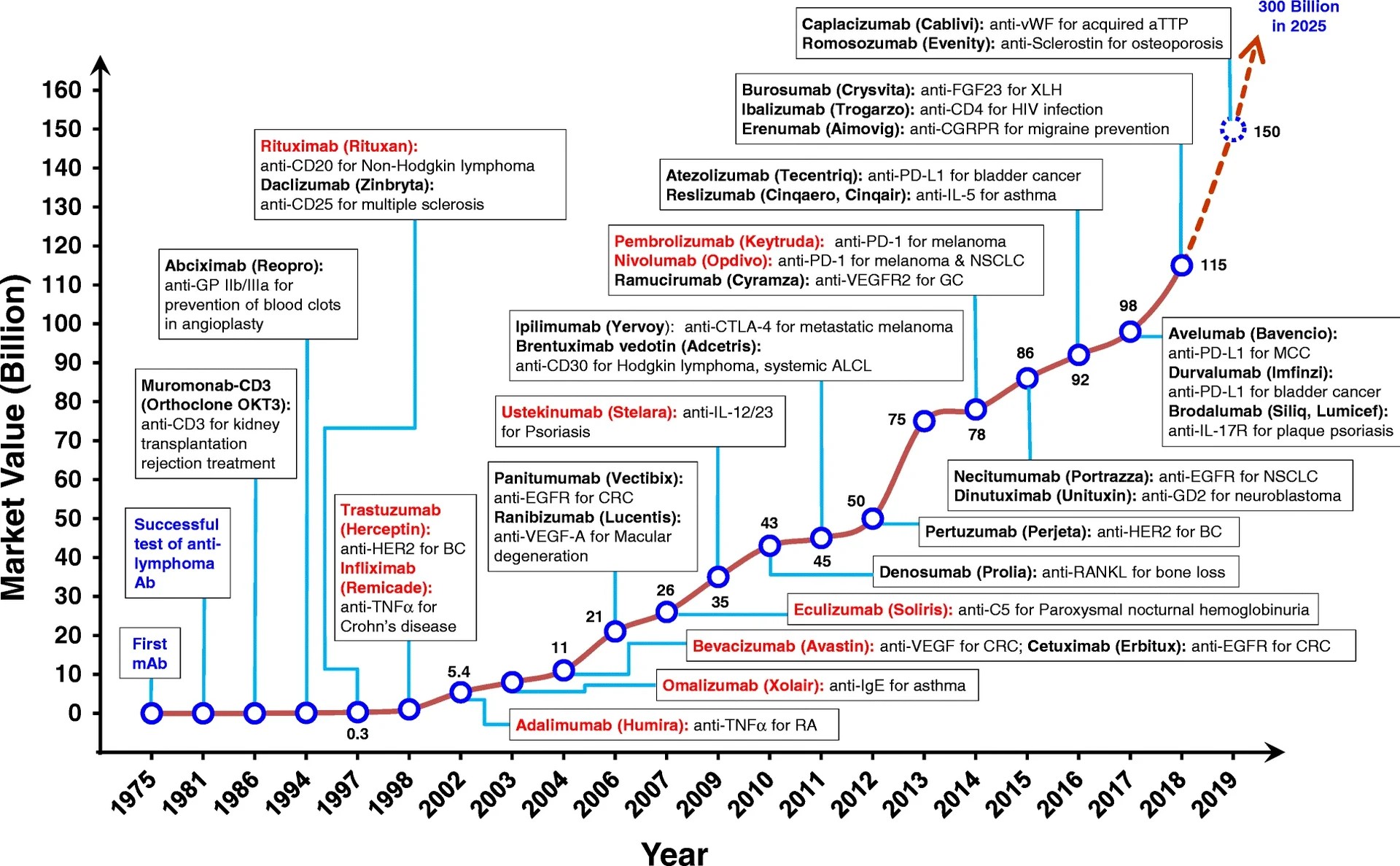
Source: drug-dev.com · Image: Timeline from 1975 showing the successful development of therapeutic antibodies and their applications by Ruei-Min Lu, Yu-Chyi Hwang, I-Ju Liu, Chi-Chiu Lee, Han-Zen Tsai, Hsin-Jung Li &, CC BY 4.0, via Wikimedia Commons
Get started today with Solo access →