A new hybrid mechanistic-data-driven model of lactate consumption and production for mammalian cell cultures captures both lactate back-metabolism and lactate run-away. It provides accurate real-time predictions of viable cell density, monoclonal antibody, glucose, and lactate concentrations during bioprocessing, according to researchers from University College London and AstraZeneca.
This model helps biopharmaceutical manufacturers predict batch-to-batch variability and identify failing runs early in the process. By improving the initial model’s accuracy rate from 88%, the team reduced the root mean squared error by about 50% for glucose and by about 30% for lactate.
A key feature of the model is a lactate switch detection algorithm that uses pH as a soft sensor to detect whether cells will undergo lactate back-metabolism around day 5. This information can be integrated into control strategies to prevent lactate run-away, which can lead to batch failure or lower titer.
The model was trained with online data such as pH values and glucose flow rates, combined with historical data. Despite being trained on a small number of runs, the predicted values closely matched actual measured values, indicating its potential contribution to the industry.
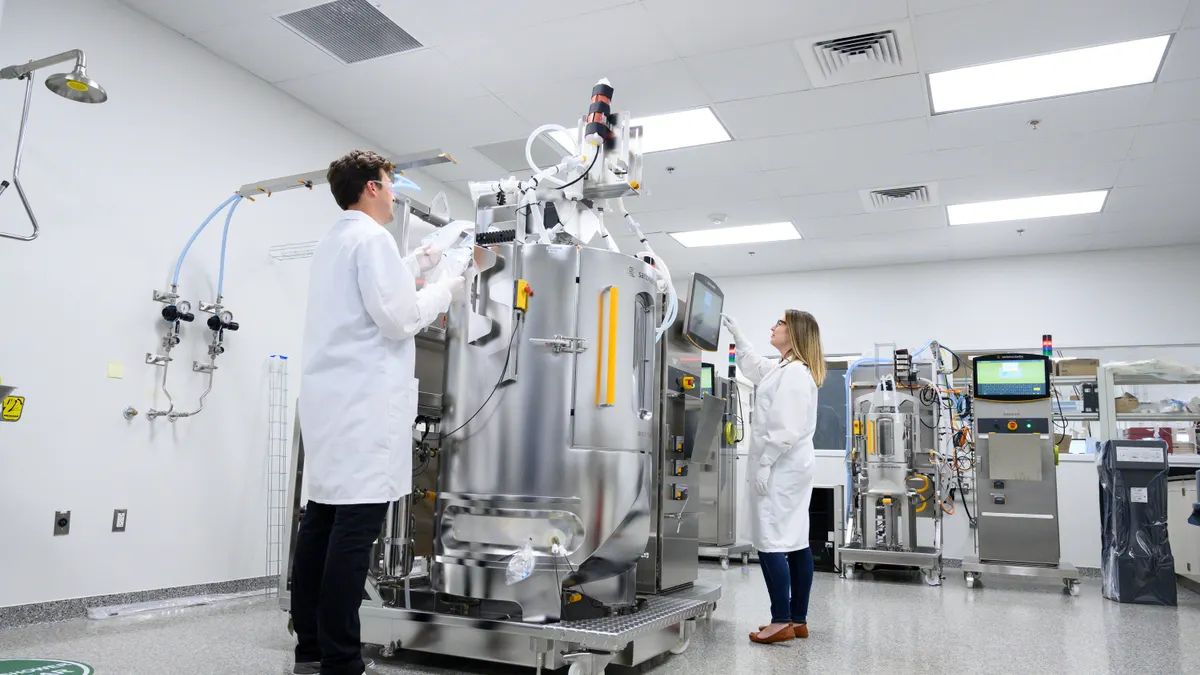
Source: genengnews.com · Image: President Trump at the Bioprocess Innovation Center at Fujifilm Diosynth Biotechnologies (50162976962) by The White House from Washington, DC, Public domain, via Wikimedia Commons
Start your 7-day trial and see what the database can do →