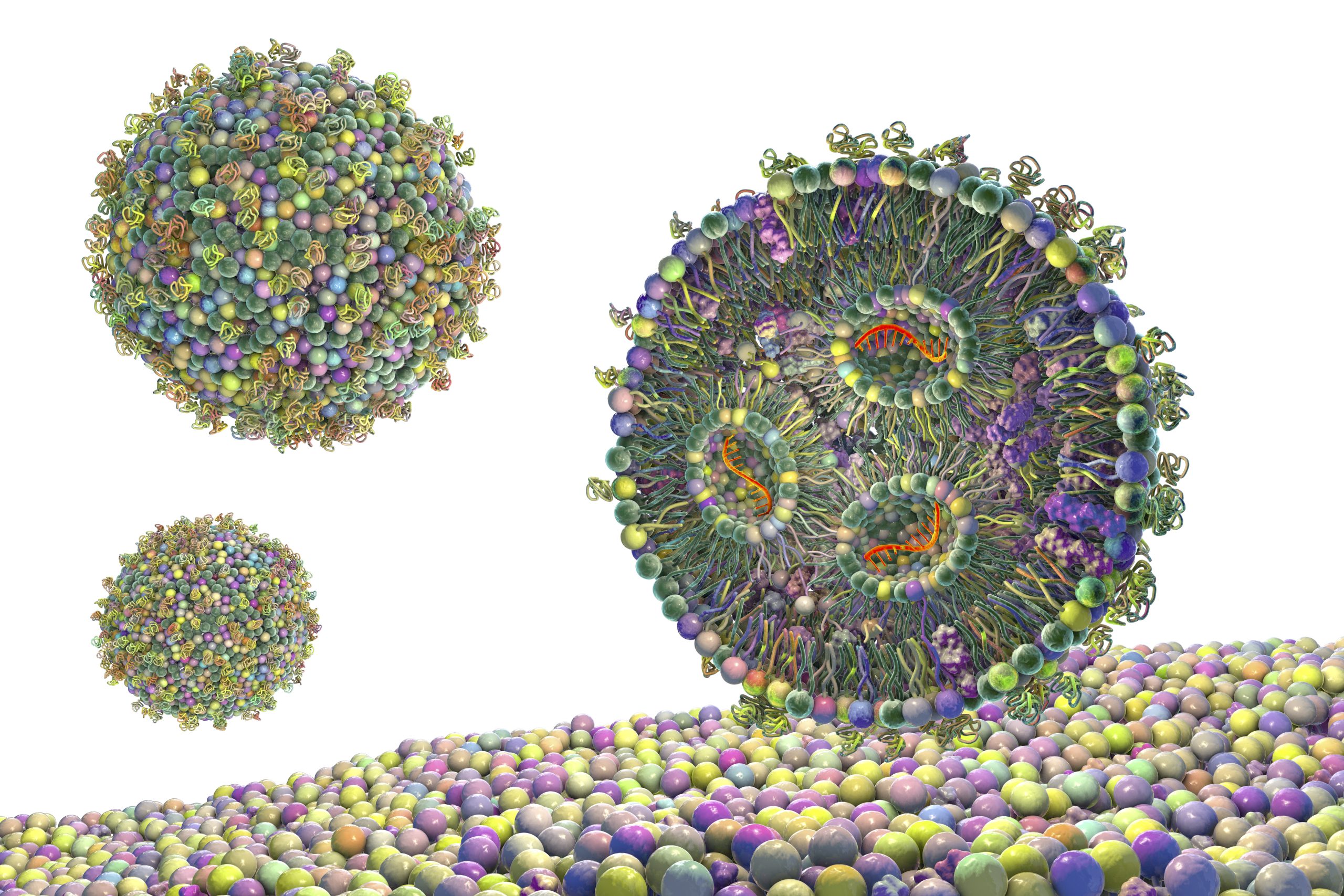
Lipid nanoparticles may deliver better when they are a little disorganized. That’s according to new research from a study led by scientists at the University of Copenhagen that will be presented at the Biophysical Society Annual Meeting in San Francisco from February 21-25. Their research focused on lipid nanoparticles (LNPs), which were crucial to the success of mRNA vaccines for Covid-19, and are now being used to deliver treatments for cancer and rare genetic diseases. A persistent challenge is that only a small fraction of the cargo carried by LNPs—about one to five percent—gets released inside cells, limiting their therapeutic potential, particularly in rapidly dividing cancer cells.
Using a new approach to examine drug-delivery vehicles in finer detail, the scientists developed a high-throughput method to measure individual nanoparticles rather than just the average properties of a batch. They discovered two distinct subpopulations of particles: organized ones with neatly structured cargo and amorphous ones that are more disorganized. Surprisingly, the disorganized particles exhibited better performance inside cells.
Historically, drug developers have focused on maximizing the amount of medicine packed into each nanoparticle. However, the findings suggest that maintaining a disorganized internal structure may enhance cargo release once inside cells. Breuer explained that organized nanoparticles tightly bind positively charged lipids to negatively charged RNA, which may hinder cargo release upon entering a cell. In contrast, disorganized particles allow for separation of charges, facilitating the release of the medicine. This paradigm shift could lead developers to prioritize the effectiveness of cargo release over mere quantity, potentially transforming LNP design strategies.
Start your 7-day trial and see what the database can do →