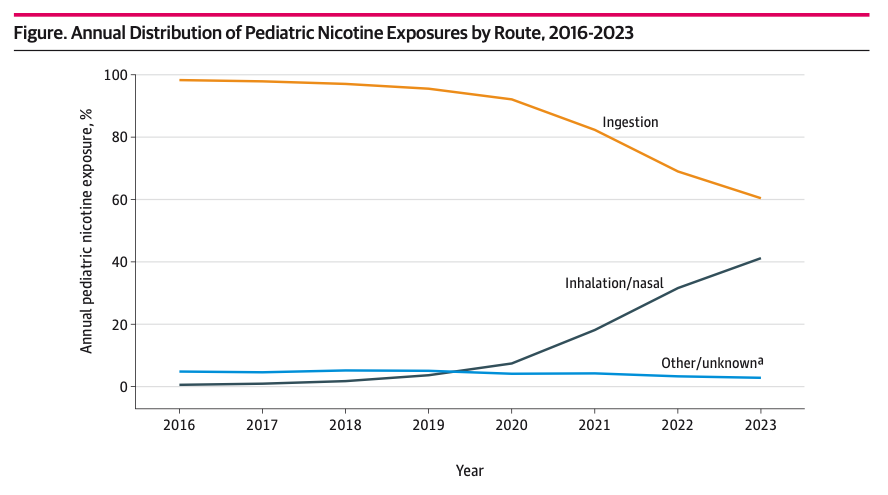
Recent studies indicate a notable increase in pediatric nicotine exposure, primarily driven by the rising prevalence of vaping among adolescents. This shift in exposure patterns raises significant concerns for public health officials and regulatory bodies, as the long-term effects of nicotine on developing brains remain inadequately understood. The growing use of e-cigarettes has made nicotine more accessible to younger populations, complicating efforts to mitigate addiction risks and health consequences associated with early exposure.
In the context of evolving tobacco control policies, this trend necessitates a reevaluation of existing regulations surrounding nicotine products. As pediatric exposure continues to rise, stakeholders in the pharmaceutical and healthcare industries must advocate for stricter guidelines and enhanced educational initiatives aimed at parents and guardians. The implications of these findings underscore the urgent need for a coordinated response to protect vulnerable populations from the potential harms of nicotine addiction.
Open the full market picture for your next decision →