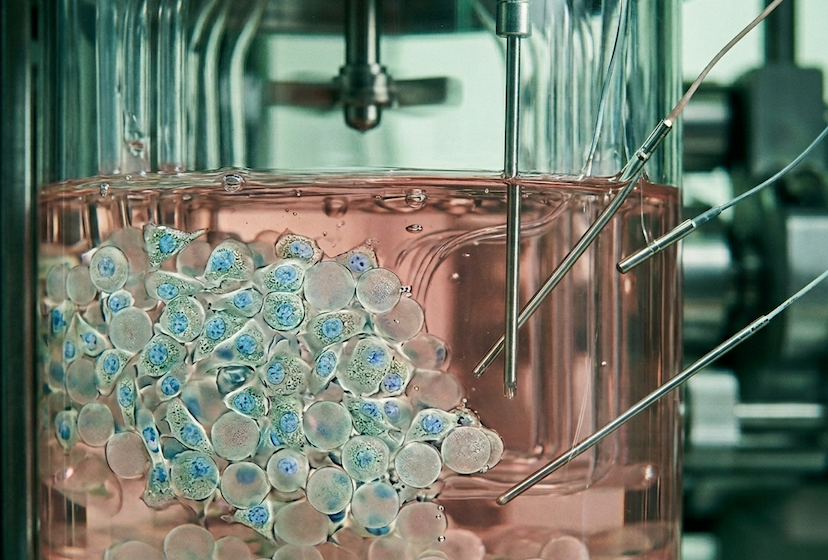
At the 2026 BiOS conference in San Francisco, researchers presented a biosensing platform known as TissueSense, which aims to enhance the monitoring of living cells and tissues during drug bioprocessing. This innovative system offers continuous, real-time insights into cellular behavior without disrupting the biological environment, addressing a critical need in biopharmaceutical manufacturing.
Maintaining consistent cell health and productivity is vital in biopharmaceutical production, yet traditional monitoring methods often rely on intermittent sampling or endpoint measurements, providing only a fragmented view of dynamic biological processes. TissueSense overcomes these limitations by enabling continuous, in situ observation, capturing changes as they occur and allowing for more informed decision-making in production.
The platform utilizes resonator-based photonic sensing combined with phase contrast microscopy, facilitating simultaneous detection of biochemical activity and structural changes in cells. This dual capability offers a comprehensive understanding of cellular responses to varying process conditions, which directly affect production outcomes. Notably, TissueSense operates without labels, eliminating the potential interference from fluorescent markers that could alter cell behavior, thus supporting extended observation in conditions that closely mimic natural environments.
Data generated from TissueSense are analyzed using machine learning, enabling the quantification of up to 18 biomarkers, which link molecular outputs to tissue structure and function. This multiplexed capability is particularly significant in drug manufacturing, where even minor variations in cellular activity can impact yield, quality, and reproducibility. While TissueSense primarily focuses on mammalian tissue models, advancements in microbial systems indicate a broader trend toward continuous, high-resolution monitoring across various bioprocessing platforms.
In yeast-based systems, for instance, researchers have developed microbead-based cultivation methods that facilitate high-throughput, label-free screening of numerous individual mutants in minimal volumes, enhancing desirable traits for industrial bioproduction. Similarly, in bacterial bioreactors, automated flow cytometry techniques now enable real-time tracking of population dynamics and physiological states, optimizing feed strategies and overall process performance. Collectively, these advancements suggest a future where integrated bioprocess monitoring transcends traditional boundaries, moving toward dynamic control of biological production across mammalian, yeast, and bacterial systems.
Get started today with Solo access →