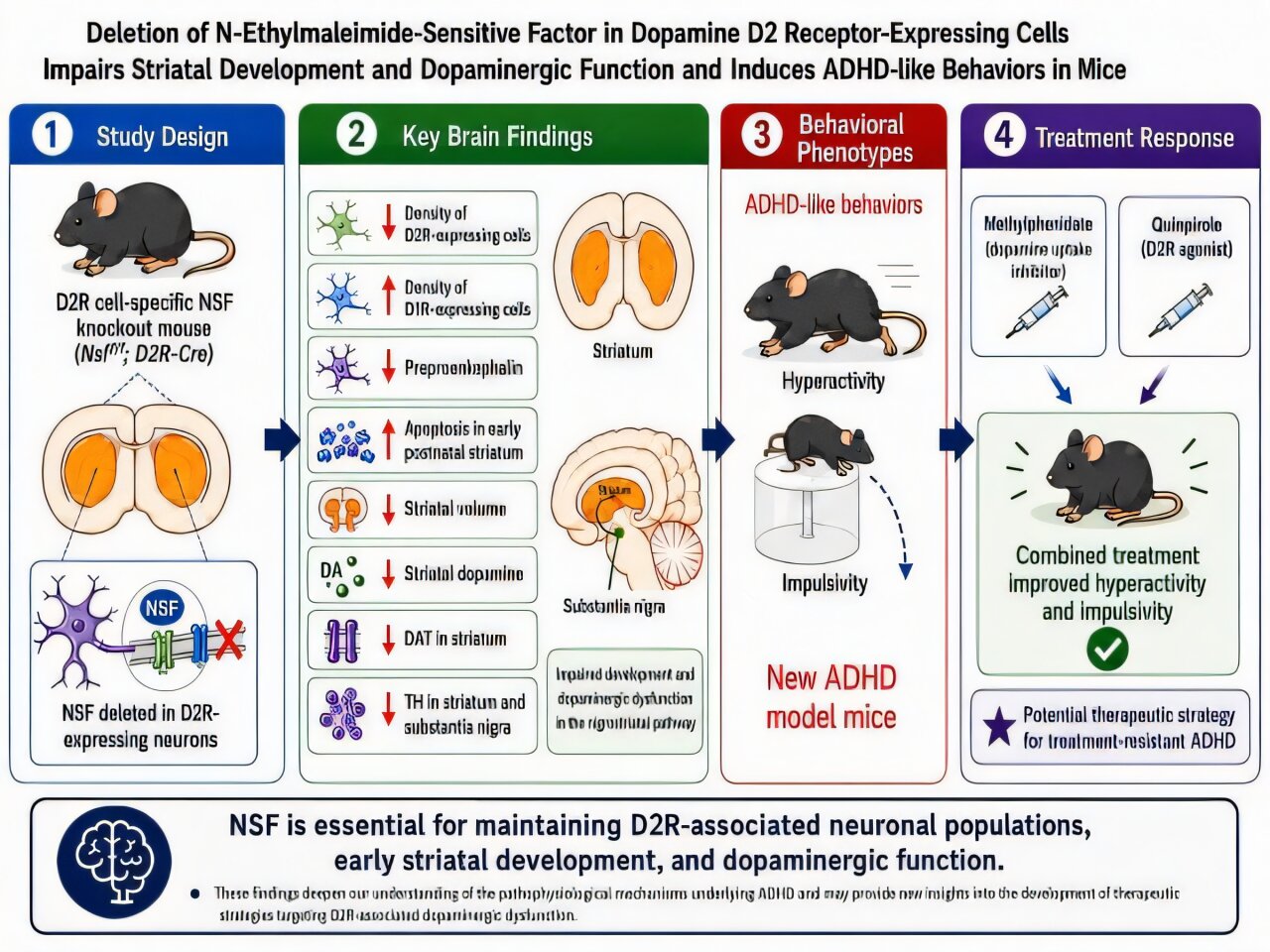
Recent research from the University of Fukui has identified a critical link between the loss of a brain protein, N-ethylmaleimide-sensitive factor (NSF), and ADHD-like behaviors in genetically modified mice. The study indicates that the absence of NSF in dopamine D2 receptor-expressing cells results in decreased dopamine levels and increased impulsivity and hyperactivity, core symptoms of ADHD. This discovery sheds light on the neurobiological underpinnings of ADHD, a disorder that affects millions worldwide and is characterized by difficulties in attention, impulse control, and activity regulation.
Led by assistant professor Min-Jue Xie, the research suggests that NSF plays a vital role in maintaining the integrity of dopaminergic neurons and their function. The findings imply that understanding the mechanisms by which NSF influences D2 receptor function could open new avenues for therapeutic interventions, particularly for patients with treatment-resistant ADHD. While the immediate clinical applications remain distant, the insights gained from this study may eventually inform the development of targeted therapies aimed at restoring normal dopamine signaling in affected individuals.
Start your 7-day trial and see what the database can do →