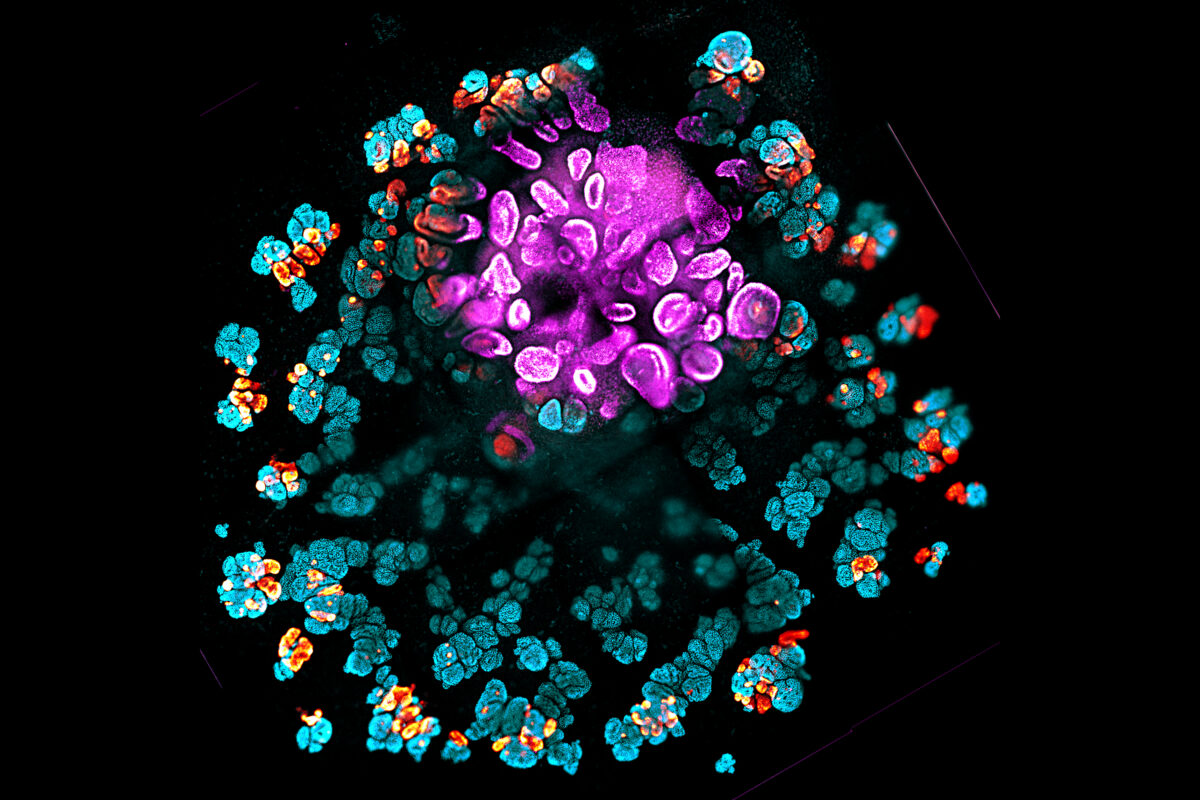
Researchers at the University of Southern California (USC) have developed a groundbreaking method to create more reproducible kidney organoids from human pluripotent stem cells (hPSCs) by integrating biological insights with engineering techniques. By identifying a previously unrecognized developmental axis in the human kidney, the team engineered Wnt-secreting ‘synthetic organizer’ cells, which mimic the kidney’s natural developmental environment, thereby enhancing the organoids’ structural fidelity.
This advancement is significant for pharmaceutical and biotechnological applications, as it improves the reliability of organoids for disease modeling and therapeutic evaluation, ultimately supporting the long-term goal of generating transplantable kidney tissues. Nils Lindström, PhD, co-corresponding author of the study published in Science, emphasized the importance of achieving reproducibility in organoid models, which can lead to robust preclinical evaluations of cell function and disease.
The study highlights the potential of synthetic organizers to restore spatial signaling interactions often absent in conventional organoid cultures, offering a modular approach that can be applied to various organoid systems. This innovative strategy not only aligns with the principles of developmental biology but also paves the way for more controlled engineering of tissue architecture, marking a significant step forward in regenerative medicine.
Get started today with Solo access →