700,000 seniors, one flat copay, one net price agreed behind closed doors. Medicare’s GLP-1 Bridge is being sold as the drug-pricing win of the decade. Run the numbers from the manufacturing side and it looks more like the most profitable toll road in pharma.
Every so often a single number tells you everything about how an industry really works. This month, that number is $245.
It is the monthly net price at which the two companies that own America’s obesity market supply their drugs to Medicare. It is being celebrated as a discount, and against a list price of more than a thousand dollars it is one. Put it next to what the same molecule costs a few borders away, though, and “discount” is not the word a procurement professional would reach for.
The Number Everyone Is Celebrating
The mechanics are simple. Seniors who enrol pay a $50 monthly copay; manufacturers supply the drugs at a net $245 a month; Medicare, and therefore the taxpayer, covers the remaining $195 per patient per month. The programme opened on July 1 and runs to the end of 2027.
Uptake has been explosive. Eli Lilly CEO Dave Ricks told CNBC that 700,000 new seniors have started GLP-1 treatment since Medicare coverage launched in July, and that 70% of them are on Lilly medicines. He called it “very market expansionary.” Pharmacies were caught off guard too: Walgreens and CVS have each filled more than 100,000 Bridge prescriptions, with Walgreens describing volume as well above what the chain had expected.
And the ceiling is far away. Lilly has said as many as 20 million Medicare beneficiaries could qualify.
Same Molecule, Four Prices
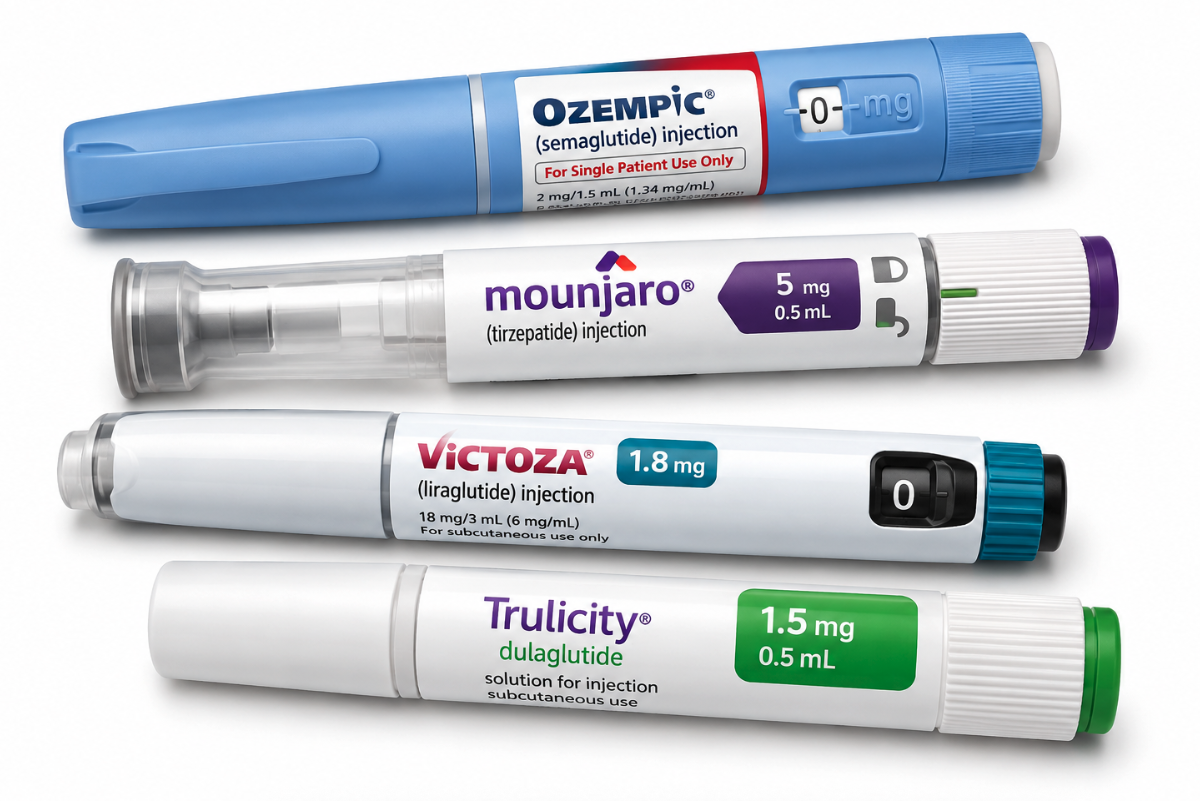
Now for the comparison nobody in Washington put on a slide. Semaglutide, the molecule in Wegovy and Ozempic, is one of the four products on the Bridge menu. Outside the United States it is already a generic.
- India: the semaglutide patent expired on March 20, 2026, and more than 40 generic versions followed within weeks, from Sun Pharma, Zydus, Dr. Reddy’s, Glenmark, Alkem and others.
- Canada: on April 28, 2026, it became the first G7 country to approve generic semaglutide. By late June, Health Canada had also authorized Apotex’s generic version of Wegovy.
| Market | Product | Monthly price | $245 as a multiple |
|---|---|---|---|
| USA, list | Branded injectables | $1,000–1,350 | – |
| USA, Medicare Bridge | Branded (net) | $245 | 1× |
| Canada, wholesale | Apo-Semaglutide (generic) | C$78.14 per 4 weeks vs C$240.48 for the brand (well under US$60) | ~4× |
| India, retail | Branded (pre-generic) | ₹8,800–10,000 | – |
| India, retail | Generic pens (Sun Pharma) | ~₹3,400 (~$36) | ~7× |
| India, retail | Generic vials | from ₹1,290 (~$14) | ~17× |
Table 1. Dose strengths and formats differ between products, so these are not dose-for-dose equivalents of Wegovy 2.4 mg maintenance. The direction of the gap is not in dispute; its exact size varies by dose.
Even with every caveat applied, the Canadian generic, made to G7 regulatory standards, lands at roughly a quarter of what the US taxpayer-backed “discount” pays.
Who Actually Pays
Here is the part of the design that should make any finance professional sit up. The original plan was to run coverage through the insurers who manage Part D. The insurers balked at the potential cost. So the drugs are now paid for by exactly two parties: taxpayers and the patients filling prescriptions.
In other words, the parties whose entire business is pricing risk looked at this deal and walked away. The public purse took the risk they refused.
Our own back-of-envelope run-rate, using only published figures:
| Metric | Calculation | Annualised |
|---|---|---|
| Taxpayer cost at current enrolment | 700,000 × $195 × 12 | ≈ $1.64 billion |
| Lilly’s Bridge revenue (70% share) | 490,000 × $245 × 12 | ≈ $1.44 billion |
| Full-enrolment scenario | CBO estimate, every eligible beneficiary enrolled | > $30 billion |
Table 2. API Data Insights estimates. They assume current enrolment persists and ignore discontinuation.
Nobody has published an official figure. CMS has not released its own estimate. KFF projects the Bridge could cost anywhere from $1.3 billion to $10 billion over its 18-month life, depending on take-up.
The Discount Was the Price of Admission
To understand why $245 is not really a concession, look at what the manufacturers got in exchange. Medicare had been barred by law from paying for weight-loss drugs since 2003. That changed after the administration struck pricing agreements with Lilly and Novo Nordisk in November 2025.
Those were most-favored-nation agreements, the same class of deal that, as we reported last week, opened the zero-tariff lane under April’s Section 232 proclamation. The package therefore looks like this:
- Given up: list-price margin on a population that was never paying list price, because it wasn’t covered at all.
- Gained: a new federally funded channel of up to 20 million patients, no insurer formulary steering, and protection from the 100% tariff now hitting everyone without a deal.
The market has already priced the trade. Lilly’s market cap stands at about $1.03 trillion, and its forward 12-month EPS estimate has climbed from roughly $31 to $42 since December. The Ricks interview coincided with Lilly breaking ground on a $6.5 billion plant in Houston that will make the active ingredient for its oral GLP-1, Foundayo. That is the onshoring story Washington wanted, paid for in part by a Medicare channel Washington created.
The Molecule America Isn’t Allowed to Buy
Why can’t Medicare simply buy the $56 version? Patents. The core US compound patent on semaglutide runs to December 5, 2032, possibly mid-2033 with pediatric exclusivity. Around it sits a thicket: Novo Nordisk has filed at least 49 semaglutide-related patents covering formulations, devices and indications.
The most uncomfortable detail is who has already agreed to wait. Hatch-Waxman challenges from generic makers including Mylan, Dr. Reddy’s, Apotex and Sun Pharma have been settled confidentially. Read that list again. Dr. Reddy’s, Apotex and Sun are the very companies selling generic semaglutide in Canada and India today. The capacity exists and the quality dossiers exist. What keeps them out of the US is not chemistry. It is contracts nobody outside the parties has read.
Meanwhile the one cheap channel Americans had, compounding, is being shut down, and not without reason. This month FDA inspectors cited a compounding pharmacy for making semaglutide and tirzepatide copies in insanitary conditions. The quality argument against compounders is legitimate. It is also convenient for anyone selling at $245.
The Other Side of the Ledger
Fairness requires the counter-case, and it is not trivial.
- Innovation cost. Tirzepatide has no generic anywhere on earth. The 70% of Bridge patients on Lilly drugs are on a molecule that exists because someone spent a decade and billions developing it.
- Offsets. The CBO put the net cost of broader obesity-drug coverage at about $35 billion over the decade to 2034, once health savings are counted. Not free, but less than the gross numbers suggest.
- Monopoly margins are not guaranteed. Semaglutide sales topped $35 billion in 2025, yet generic erosion abroad has pushed Novo Nordisk toward a projected 5–13% sales decline in 2026. Novo’s workforce is down 13,000, and its shares fell more than 7% this month.
- US prices are moving too. Novo introduced a $349 monthly cash price and plans to cut Ozempic and Wegovy list prices to $675 in 2027.
The honest conclusion is not that $245 is a scandal. It is that $245 is a negotiated price for exclusivity, and it should be described that way rather than as a gift.
What This Means for Sourcing and BD Teams
For anyone whose job is supply rather than headlines, this is the signal:
- The Bridge has a cliff. Nothing has been decided about what happens to enrolled seniors after December 31, 2027. Plan demand scenarios for both extension and collapse.
- Canada is the live lab. It is the only G7 market with generic semaglutide on shelves. Its pricing curves, tender behaviour and pharmacy uptake are the best available preview of the US in 2032.
- China is next. The Chinese foundational patent also expired on March 20, 2026, and at least 16 Chinese companies are developing generic semaglutide. Expect peptide API capacity to swell, and semaglutide API spot prices to follow.
- The 2032 door may open into a tariff wall. The July generic-tariff announcement keeps imported generics at zero until August 2028, then 100%, then 200% a year later. It was posted on social media, not signed. If it survives, America’s first generic semaglutide could arrive from India carrying a 200% duty. The companies that win 2032 are the ones qualifying non-Indian, non-Chinese or US-based peptide capacity now.
- Europe runs on a different clock. Supplementary Protection Certificates keep semaglutide protected in the EU until March 2031. That creates a staggered, market-by-market launch sequence worth mapping supplier by supplier.
The Uncomfortable Part
Strip away the press releases and here is what happened. A government that could not negotiate like a buyer negotiated like a partner instead. It created a new market, handed that market to the two companies that already dominated it, and asked taxpayers to fund the gap that insurers refused to touch. It then called the arrangement a discount, because the price is lower than a list price almost nobody paid.
Meanwhile, the same molecule leaves factories in Hyderabad and Toronto at a fraction of the cost. The companies that make it are ready and have signed papers agreeing to stay out of the US. And the only low-cost American channel is being dismantled on quality grounds, legitimately, but conveniently.
$245 is not the price of a drug. It is the price of exclusivity. Taxpayers are paying it monthly, 700,000 times over, and counting.
Sources: CMS Medicare GLP-1 Bridge program materials; CNBC (Sept. 21, 2026); IBTimes UK (Sept. 24, 2026); STAT; Forbes; KFF; Congressional Budget Office; Fierce Pharma; Business Model Analyst; TIKR; Health Canada; Apotex; CNBC (Mar. 23, 2026); DelveInsight; Becker’s Hospital Review; Abel + Imray; BioSpace; PharmExec; India Law. Run-rate figures are API Data Insights estimates.
Mapping the post-patent GLP-1 supply chain? The API & FDF Intelligence database shows who manufactures semaglutide and peptide APIs, where their facilities are, which certificates they hold and which markets they already supply, with direct contacts for every holder.
Find your 2032-ready supplier today →